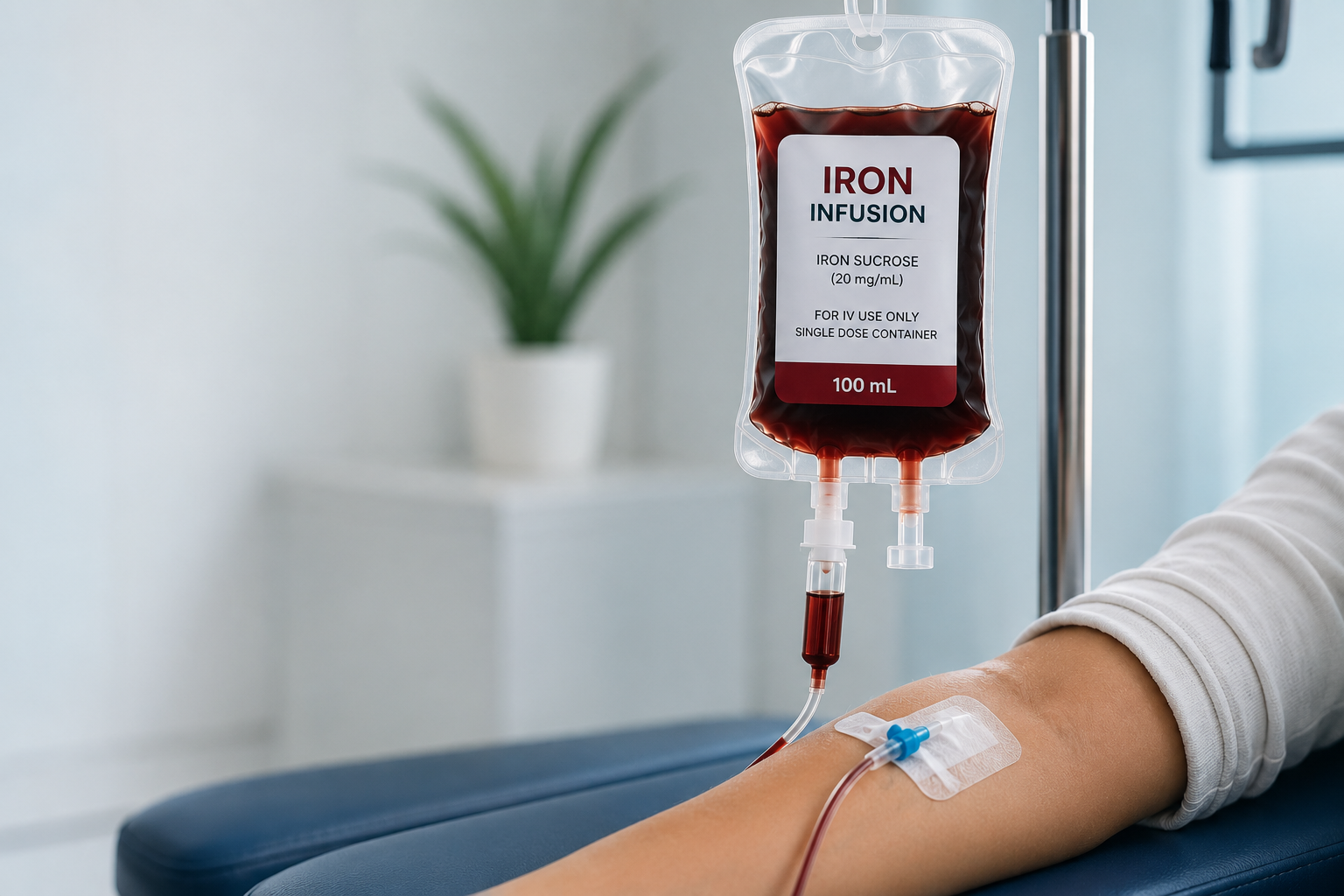
What is an IV Iron Infusion?
An IV iron infusion delivers iron directly into the bloodstream through a vein, bypassing the gastrointestinal tract. This allows for faster and more efficient absorption compared to oral supplements. Performed in a clinical setting, an iron infusion increases iron levels and hemoglobin in the blood, helping improve oxygen transport. It is especially beneficial for individuals with severe deficiency or absorption issues.
Iron infusions deliver iron directly into the bloodstream, offering a quicker and more efficient treatment for severe iron deficiency compared to oral supplements.
Why Might You Need an Iron Infusion?
There are several reasons why someone might need an iron infusion. Common causes include:
- Gastrointestinal bleeding
- Conditions that impair the absorption of iron, such as inflammatory bowel disease and celiac disease
- Severe blood loss from surgeries
- Conditions like cancer-related anemia that require rapid iron replenishment via infusion
During pregnancy, the increased demand for iron often necessitates iron infusions to prevent severe iron deficiency anemia. Intravenous iron therapy is preferred when oral supplements are ineffective or not well-tolerated.
Benefits of Iron Infusions
Iron infusions provide a rapid increase in iron levels and hemoglobin, significantly improving symptoms of iron deficiency anemia. Many patients notice a boost in energy and well-being within days to weeks, compared to the months it may take for oral iron supplements to show results.
Iron infusions are generally better tolerated than oral iron, which can cause gastrointestinal side effects like nausea, constipation, and cramps. This makes intravenous iron therapy a more comfortable option. The benefits of an iron infusion can last several months to a few years, depending on the underlying cause of iron deficiency.
"Intravenous iron is a more reliable option due to its bypass of the gastrointestinal tract, leading to faster resolution of anemia."
Potential Risks and Side Effects
Although generally safe, iron infusions carry risks. While generally safe, iron infusions can pose risks such as allergic reactions, requiring post-infusion monitoring for potential side effects. Severe allergic reactions like anaphylaxis are rare but life-threatening, necessitating medical supervision during the procedure.
Common side effects include headaches, mild fever, soreness at the injection site, and temporary changes in taste, usually resolving within a couple of days. Post-infusion monitoring for at least 30 minutes helps observe any immediate adverse reactions.
The Iron Infusion Procedure
The iron infusion procedure starts with our healthcare providers evaluating your medical history. The setup involves cleaning the skin at the IV site, securing the IV, and inserting a needle into a vein to administer the iron solution.
- The infusion typically takes 15 to 30 minutes, depending on the prescribed dose.
- During this time, our healthcare providers monitor for any adverse reactions, including low blood pressure.
- After the infusion, there's a 30-minute observation period to ensure no immediate complications.
Recovery and Aftercare
Recovery is usually quick, with most patients able to resume daily activities immediately. However, adequate rest helps the body rebuild iron reserves. Some patients may experience mild side effects such as nausea, cramps, or diarrhea.
Monitoring for delayed symptoms is important. Swelling or bloating in areas like the face or legs may occur. Always report unusual symptoms to your healthcare provider to ensure a smooth recovery.
How Many Iron Infusions Do You Need?
The number of sessions required varies based on the severity of iron deficiency and individual patient needs. Patients with severe iron-deficiency anemia may need several sessions to restore iron levels. The required dosage of IV iron is determined by factors such as the severity of anemia and body weight.
Typically, one dose or two doses over several weeks are sufficient to correct iron levels and correct anemia, provided that patients have enough iron. Most patients report improved well-being within a few days to a week, making it a highly effective treatment option.
Comparing Iron Infusions to Other Treatments
Iron infusions offer distinct advantages over other treatments for iron deficiency anemia:
- IV iron therapy is often more effective.
- It has fewer gastrointestinal side effects.
- It leads to faster resolution of anemia compared to oral supplements.
- Absorption issues in the gastrointestinal tract can make oral iron less effective.
- Intravenous iron is a more reliable option due to these absorption issues.
Iron infusions are less painful compared to iron injection, which delivers a whole dose into a muscle immediately. However, the cost of IV iron varies based on insurance coverage and specific formulations. Overall, iron infusions provide faster, more comfortable, and often more effective treatment for severe iron deficiency anemia.
Who Should Avoid Iron Infusions?
Some people should avoid iron infusions due to the risk of severe allergic reactions or other complications. People with a history of severe allergic reactions or anaphylaxis to iron products should not undergo iron infusions. Patients with significant hypotension may also experience exacerbations and should proceed with caution or avoid iron infusions.
Patients with active infections are advised against IV iron infusions as the treatment may exacerbate their condition. Consulting a healthcare provider is crucial to determine the safest and most effective treatment options for iron deficiency anemia.
Iron Infusions and Chronic Conditions
IV iron infusions are often necessary for chronic conditions affecting iron absorption or metabolism. Those with severe heart disease or liver dysfunction may need to reconsider iron infusions due to potential complications. Patients with ongoing blood loss may require more infusions than those with milder deficiencies.
Individuals with iron overload conditions, such as hemochromatosis should avoid IV iron infusions to prevent complications and the increased risk of adverse effects. Careful monitoring and consultation with our Edmonton healthcare providers are crucial for managing iron deficiency in chronic kidney disease conditions.
How CareMed Can Help
At CareMed Wellness Clinic, we provide comprehensive care for patients requiring IV iron infusions to treat iron-deficiency anemia when oral supplements are insufficient or not tolerated. Our experienced healthcare providers in Edmonton provide treatments that ensure rapid improvement in energy, reduced fatigue, and support healthy red blood cells and oxygen levels.
Walk-In or Physician Referral
Patients can walk in for a consultation or have their physician fax or email referrals for IV iron, antibiotics, hydration, or other treatments. This flexibility ensures timely and efficient care tailored to specific needs.
Verification & Initial Nursing Consultation
Our clinical team verifies orders, checks for allergies, and contacts the patient to schedule treatment. A baseline health assessment, including vitals and medical history, ensures patient safety and treatment effectiveness.
Pharmacy Coordination & Medication Preparation
Our on-site pharmacy partner, Summerside Value Drug Mart, maintains high standards of product integrity, safety, and timely preparation of all IV medications, ensuring quality and compliance.
Infusion Administration
Trained professionals administer the infusion in a calm, monitored setting. We adhere to AHS guidelines on infection prevention, sharps management, and patient safety, ensuring a smooth and secure procedure.
Post-Infusion Observation & Discharge
Patients are monitored post-infusion for any adverse reactions and given aftercare instructions to ensure safe and effective recovery. This monitoring helps manage potential side effects and provides peace of mind.
Follow-Up
Our team follows up within 24-48 hours to monitor recovery, manage side effects, and schedule additional treatments if needed, ensuring continuous support and optimal outcomes.
IV Iron Infusion in Edmonton
In summary, IV iron infusions offer a highly effective solution for treating iron deficiency anemia, particularly when oral supplements are inadequate. They provide rapid improvement in iron levels, better tolerance, and significant benefits in energy and overall well-being. However, it is crucial to be aware of the potential risks and to consult with a healthcare provider in Edmonton to determine the best treatment option.
By understanding the procedure, benefits, and potential risks, patients can make informed decisions about their health. If you or someone you know is struggling with iron deficiency anemia, consider discussing iron infusions with your Edmonton healthcare provider. The road to better health could be just an infusion away.
Ready to stop running on empty?
Book your IV iron infusion consultation at CareMed Wellness Clinic — Edmonton or Camrose.
Edmonton: 587-200-8705 | Camrose: 780-860-1934 | infusion@caremedwellness.ca
Book Now via Jane App →